
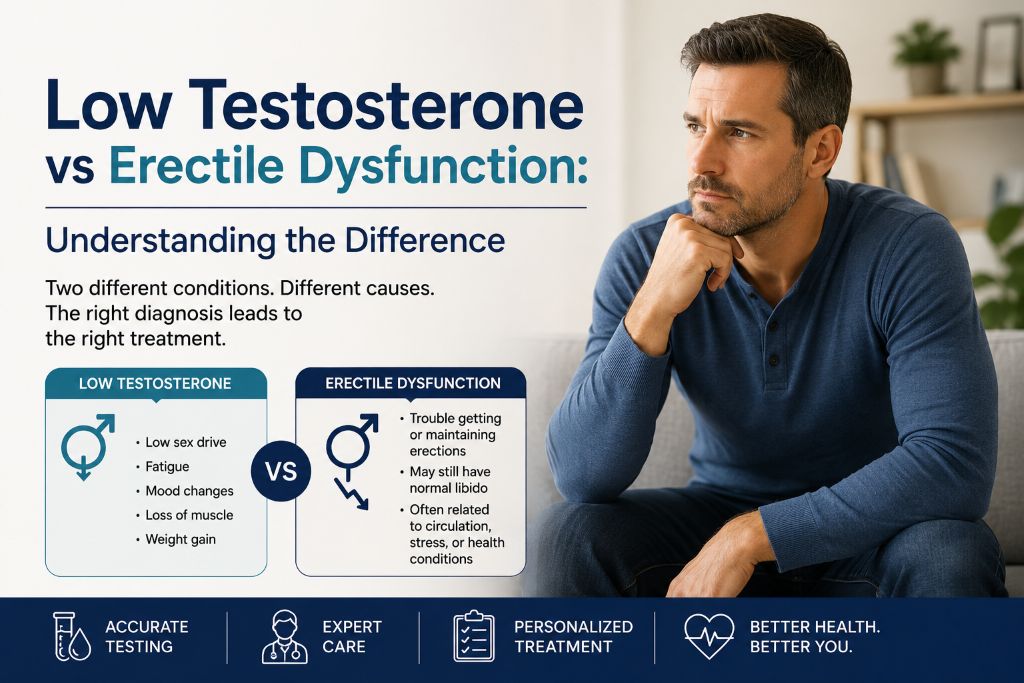
Many men experience changes in their sexual health as they age, but understanding the difference between low testosterone vs erectile dysfunction is essential for finding the right treatment. Although these conditions can share similar symptoms, they are distinct medical issues with different causes, diagnoses, and treatment options. Confusing one for the other may delay proper care and affect your overall well-being.
Many men assume that erection problems automatically indicate low testosterone, but this is not always the case. Likewise, men with declining testosterone levels may experience symptoms beyond sexual function, including fatigue, mood changes, and reduced muscle mass. Identifying the root cause through professional evaluation is the first step toward effective treatment.
In this guide, we’ll explain the differences between low testosterone vs erectile dysfunction, explore their symptoms and causes, discuss available treatment options, and help you determine when it’s time to seek professional care from the experts at MyFitMed.
What is Low Testosterone?
Low testosterone affects much more than sexual desire. It influences energy levels, muscle strength, emotional well-being, metabolism, and overall physical performance. Recognizing the signs early allows men to seek appropriate care before symptoms significantly impact daily life.
Understanding Testosterone and Its Role
Testosterone is the primary male sex hormone responsible for numerous essential functions throughout the body. It supports sexual development during puberty while continuing to regulate important bodily processes throughout adulthood.
Key roles of testosterone include:
- Supporting healthy libido and sexual function
- Maintaining muscle mass and physical strength
- Promoting bone density
- Regulating fat distribution
- Supporting red blood cell production
- Maintaining energy levels
- Influencing mood and cognitive performance
Although testosterone naturally declines with age, some men experience a more significant decrease due to medical conditions, lifestyle factors, obesity, chronic illnesses, or hormonal disorders. When testosterone levels fall below a healthy range, symptoms may become noticeable and require medical evaluation. Low testosterone treatment can help restore healthy hormone levels, improve symptoms, and support long-term wellness.
Healthy testosterone levels contribute significantly to overall wellness, making proper hormone balance an essential part of lifelong men’s hormone health.
Common Low Testosterone Symptoms
Recognizing low testosterone symptoms can help men seek treatment before complications become more severe.
Common symptoms include:
1. Low Libido
One of the earliest signs is a noticeable decline in sexual desire. Men may lose interest in intimacy even when they previously maintained a healthy sex drive.
2. Persistent Fatigue
Low testosterone often causes ongoing tiredness that does not improve with adequate sleep or rest.
3. Loss of Muscle Mass
Declining hormone levels reduce the body’s ability to maintain lean muscle, leading to decreased strength and physical performance.
4. Weight Gain
Many men experience increased body fat, particularly around the abdomen, as testosterone levels decrease.
5. Mood Changes
Low hormone levels can contribute to irritability, depression, reduced motivation, anxiety, and emotional instability.
6. Poor Concentration
Difficulty focusing, memory problems, and reduced mental clarity are commonly reported.
7. Reduced Energy
Even routine daily activities may become more exhausting due to hormonal imbalance.
Fortunately, effective low testosterone treatment can improve many of these symptoms through lifestyle changes, hormone optimization, and medically supervised therapy.
Interesting Read: Got Low Libido? We Have Solutions for Both Men and Women
What is Erectile Dysfunction?
Erectile dysfunction is one of the most common sexual health conditions affecting men of all ages. While occasional difficulty achieving an erection is normal, persistent problems may indicate an underlying medical condition requiring professional treatment.
Understanding Erectile Dysfunction
Erectile dysfunction (ED) refers to the consistent inability to achieve or maintain an erection firm enough for satisfactory sexual activity.
ED may be:
- Temporary and related to stress or fatigue
- Intermittent due to lifestyle factors
- Chronic because of underlying health conditions
Millions of men experience erectile dysfunction, and its prevalence increases with age. However, younger men can also develop ED due to medical, psychological, or lifestyle-related causes.
Fortunately, modern erectile dysfunction treatment options are highly effective when the underlying cause is accurately diagnosed.
Common Causes of Erectile Dysfunction
Numerous physical and emotional factors can contribute to erectile dysfunction.
1. Poor Circulation
Healthy blood flow is essential for achieving and maintaining erections. Cardiovascular disease often contributes to ED.
2. Diabetes
Diabetes can damage blood vessels and nerves involved in erectile function.
3. High Blood Pressure
Hypertension affects circulation and may interfere with normal erectile performance.
4. Stress and Anxiety
Mental health significantly influences sexual performance. Anxiety, depression, and relationship stress frequently contribute to ED.
5. Lifestyle Habits
Smoking, excessive alcohol use, obesity, poor diet, lack of exercise, and insufficient sleep increase the risk of erectile dysfunction.
6. Hormonal Imbalance
Although less common than vascular causes, hormonal issues including low testosterone may contribute to erectile dysfunction in some men.
Comprehensive sexual dysfunction treatment addresses both physical and psychological contributors to improve long-term outcomes.
Interesting Read: Complete Erectile Dysfunction Guide: L-Citrulline, L-Arginine, Sildenafil, Tadalafil, and More!
Low Testosterone vs Erectile Dysfunction: What’s the Difference?
Although the two conditions may overlap, they are not interchangeable. Understanding the distinction helps physicians recommend the most appropriate treatment.
| Low Testosterone | Erectile Dysfunction |
| Hormone deficiency | Difficulty achieving or maintaining erections |
| Reduced sex drive | Libido may remain normal |
| Fatigue and muscle loss | Primarily affects erection quality |
| Diagnosed through blood tests | Diagnosed through medical evaluation |
| May contribute to ED | Can occur without low testosterone |
The biggest difference is that low testosterone vs erectile dysfunction involves two separate health concerns. Testosterone deficiency affects the body’s hormone balance and overall wellness, while erectile dysfunction primarily impacts erectile performance.
Some men experience both conditions simultaneously, while others have only one. A comprehensive medical evaluation is necessary to determine the true cause of symptoms and create an individualized treatment plan that supports long-term men’s hormone health.
Can Low Testosterone Cause Erectile Dysfunction?
Low testosterone and erectile dysfunction are closely related, but one does not automatically cause the other. Many men with low testosterone experience a reduced interest in sex rather than difficulty achieving an erection, while others may develop both conditions simultaneously.
Testosterone plays an important role in maintaining sexual desire and supporting normal erectile function. However, erections also depend on healthy blood circulation, nerve function, emotional well-being, and cardiovascular health. Because of this, a man can have normal testosterone levels and still experience erectile dysfunction due to other medical or lifestyle factors.
Some of the most common conditions that contribute to erectile dysfunction include:
- Heart disease
- Diabetes
- High blood pressure
- Obesity
- Sleep disorders
- Chronic stress
- Anxiety and depression
- Certain medications
- Smoking and excessive alcohol use
When blood tests confirm low testosterone, physicians may recommend testosterone therapy or TRT for low testosterone as part of a comprehensive treatment plan. For men with both hormone deficiency and ED, combining testosterone optimization with other therapies often provides the best results.
A personalized evaluation is essential because treating erectile dysfunction without identifying hormone deficiencies may leave symptoms unresolved.
Symptoms That Help Differentiate Low Testosterone and Erectile Dysfunction
Recognizing which symptoms are more closely associated with each condition helps physicians identify the underlying cause more accurately.
Signs More Common with Low Testosterone
These symptoms usually develop gradually and affect overall health in addition to sexual wellness.
1. Low Sex Drive
Men often notice a significant decline in libido, even if they are still able to achieve erections.
2. Persistent Fatigue
Low hormone levels commonly reduce stamina and make everyday activities feel more exhausting.
3. Mood Changes
Irritability, depression, anxiety, and decreased motivation are frequently linked to testosterone deficiency.
4. Loss of Muscle Mass
Reduced testosterone can lead to weaker muscles, slower recovery after exercise, and decreased physical strength.
5. Increased Body Fat
Many men experience weight gain, particularly around the abdomen, due to hormonal imbalance.
Signs More Common with Erectile Dysfunction
ED symptoms primarily involve erection quality rather than overall hormone-related health.
1. Difficulty Maintaining Erections
An erection may begin normally but becomes difficult to sustain during sexual activity.
2. Trouble Achieving Erections
Some men struggle to obtain an erection despite feeling sexually interested.
3. Performance Concerns
Anxiety surrounding sexual performance may worsen erectile difficulties over time.
4. Normal Testosterone Levels
Many men diagnosed with ED have completely normal hormone levels, reinforcing the importance of proper medical evaluation.
Understanding these symptom patterns allows healthcare providers to recommend the most appropriate treatment instead of relying on assumptions.
Diagnosis: How Doctors Identify the Root Cause
Proper diagnosis is the foundation of successful treatment. Because symptoms often overlap, physicians evaluate multiple aspects of a patient’s health before recommending therapy.
A comprehensive assessment typically includes:
1. Medical History
Doctors review symptoms, lifestyle habits, medications, previous illnesses, and family medical history to identify potential contributing factors.
2. Physical Examination
A physical exam evaluates body composition, blood pressure, cardiovascular health, and physical signs of hormonal imbalance.
3. Blood Tests
Laboratory testing measures testosterone levels while also checking thyroid function, blood sugar, cholesterol, and other hormone markers.
4. Testosterone Testing
Morning testosterone testing is typically performed because hormone levels are naturally highest early in the day. Repeat testing may be recommended to confirm results.
5. Cardiovascular Evaluation
Since healthy blood flow is essential for normal erections, physicians often assess heart health and circulation.
6. Lifestyle Assessment
Nutrition, exercise habits, alcohol use, smoking, stress levels, and sleep quality all influence men’s hormone health and sexual function.
Many specialized erectile dysfunction clinics combine hormone testing with cardiovascular screening to ensure patients receive the most accurate diagnosis possible.
Early diagnosis allows patients to begin effective low testosterone treatment before symptoms continue to worsen.
Treatment Options for Low Testosterone
Treatment focuses on restoring healthy hormone levels while improving overall wellness and long-term quality of life.
1. Lifestyle Improvements
Healthy lifestyle habits naturally support testosterone production and improve treatment outcomes.
2. Exercise
Strength training and regular physical activity help maintain lean muscle mass, reduce body fat, and encourage healthy hormone production.
3. Nutrition
A balanced diet rich in lean proteins, healthy fats, vegetables, and whole grains supports hormone balance while reducing inflammation.
4. Sleep
Poor sleep significantly lowers testosterone production. Most adults benefit from seven to nine hours of quality sleep each night.
5. Weight Management
Maintaining a healthy body weight through effective weight management improves hormone regulation and reduces many risk factors associated with testosterone deficiency.
While lifestyle improvements may not completely restore testosterone levels in every patient, they remain an important part of long-term hormone optimization.
Treatment Options for Erectile Dysfunction
Successful erectile dysfunction treatment depends on identifying and addressing the underlying cause.
Common treatment options include:
1. Oral Medications
Prescription medications improve blood flow and help many men achieve and maintain satisfactory erections.
2. Lifestyle Modifications
Improving diet, exercising regularly, losing excess weight, quitting smoking, limiting alcohol, and managing chronic health conditions often enhance erectile function.
3. Counseling
Stress, anxiety, depression, and relationship concerns frequently contribute to ED. Counseling or therapy may improve both emotional health and sexual performance.
4. Treating Underlying Conditions
Managing diabetes, high blood pressure, cardiovascular disease, and hormonal disorders often improves erectile function over time.
5. Combination Therapies
Many patients benefit from combining medications, lifestyle improvements, counseling, and hormone optimization when appropriate.
Modern sexual dysfunction treatment focuses on addressing the whole patient rather than simply treating symptoms.
Interesting Read: Erectile Dysfunction? We Can Help
When Hormone Replacement Therapy May Be Recommended
Not every man with sexual health concerns requires hormone replacement therapy. Physicians first confirm testosterone deficiency through comprehensive testing before recommending treatment.
Hormone replacement therapy may be appropriate for men experiencing:
- Persistent symptoms of low testosterone
- Laboratory-confirmed hormone deficiency
- Reduced quality of life despite healthy lifestyle changes
- Low libido associated with hormonal imbalance
At MyFitMed, our providers perform comprehensive hormone evaluations before recommending treatment. Patients receive personalized care plans based on medical history, symptoms, and laboratory findings.
For individuals seeking hormone replacement therapy in Dallas, we provide ongoing monitoring to ensure therapy remains both safe and effective.
In addition to specialized hormone therapy for men, we also offer hormone therapy for women, allowing both men and women to receive personalized hormone optimization from experienced medical professionals.
Why Choose MyFitMed for Men’s Hormone Health?
Choosing the right provider plays a major role in achieving successful treatment outcomes. At MyFitMed, we combine advanced diagnostics with individualized care to help patients restore their health and confidence.
Our approach includes:
- Personalized evaluations tailored to each patient’s symptoms and medical history.
- Experienced providers specializing in men’s hormone health and sexual wellness.
- Comprehensive hormone testing for accurate diagnosis.
- Customized treatment plans based on laboratory results and individual goals.
- Ongoing monitoring to optimize safety and long-term effectiveness.
- Patient-focused care emphasizing education, communication, and measurable results.
Whether you need low testosterone, testosterone replacement, or erectile dysfunction treatment, our team develops a personalized strategy designed to improve your overall health, vitality, and quality of life.
Conclusion
Understanding the difference between low testosterone vs erectile dysfunction is essential for receiving the right diagnosis and treatment. While both conditions can affect sexual health and quality of life, low testosterone is commonly associated with reduced libido, fatigue, muscle loss, and mood changes, whereas erectile dysfunction primarily affects the ability to achieve or maintain an erection and is often linked to vascular, neurological, or psychological factors.
Because these conditions often overlap, self-diagnosis can delay proper care. A comprehensive evaluation, including hormone testing and a physical examination, helps identify the underlying cause and determine the most effective treatment plan. Personalized care may include lifestyle changes, testosterone replacement therapy, medication, or a combination of treatments for the best long-term results.
At MyFitMed, we are committed to helping patients improve their men’s hormone health through advanced diagnostics, customized treatment plans, and continuous medical support. If you are experiencing symptoms of low testosterone or erectile dysfunction,schedule a consultation with MyFitMed today.
Frequently Asked Questions
Is erectile dysfunction always caused by low testosterone?
No. Erectile dysfunction is not always caused by low testosterone. Most cases are related to poor circulation, diabetes, high blood pressure, medications, stress, anxiety, or lifestyle factors. A complete medical evaluation and hormone testing help identify the actual cause and guide the most effective treatment plan.
What are the first signs of low testosterone?
Early low testosterone symptoms often include reduced libido, persistent fatigue, lower energy levels, mood changes, difficulty concentrating, decreased muscle mass, and gradual weight gain. These symptoms usually develop slowly and may worsen without proper diagnosis and treatment.
Can testosterone replacement therapy improve erectile dysfunction?
Testosterone replacement therapy can improve erectile function in men whose ED is caused or worsened by hormone deficiency. However, if erectile dysfunction results from poor circulation, diabetes, or psychological factors, additional treatments may also be necessary for the best results.
How is low testosterone diagnosed?
Doctors diagnose low testosterone using a combination of symptom evaluation, medical history, physical examination, and morning blood tests that measure testosterone levels. Additional laboratory work may be performed to identify underlying hormone imbalances or other medical conditions.
Who is a good candidate for TRT for low testosterone?
Men with persistent symptoms and laboratory-confirmed testosterone deficiency are often good candidates for TRT for low testosterone. A healthcare provider will review overall health, medical history, and treatment goals before determining whether testosterone therapy is appropriate.
Are erectile dysfunction treatments safe?
Most erectile dysfunction treatment options are safe when prescribed and monitored by qualified healthcare professionals. Treatment recommendations are based on a patient’s overall health, medications, cardiovascular status, and the underlying cause of erectile dysfunction.
How long does testosterone therapy take to work?
Many patients notice improvements in energy and libido within several weeks after beginning testosterone therapy, while benefits such as increased muscle mass, improved strength, and better body composition may continue developing over several months with ongoing treatment.
Can younger men have low testosterone?
Yes. Although testosterone naturally declines with age, younger men can also develop low testosterone due to obesity, genetic conditions, pituitary disorders, chronic illnesses, medications, excessive stress, or lifestyle factors. Early diagnosis helps prevent long-term complications.
Where can I receive treatment for men’s hormone health in Dallas?
If you are looking for specialized men’s hormone health services in Dallas, MyFitMed provides comprehensive hormone evaluations, testosterone testing, personalized treatment plans, testosterone replacement therapy, and ongoing monitoring to support long-term health and wellness.