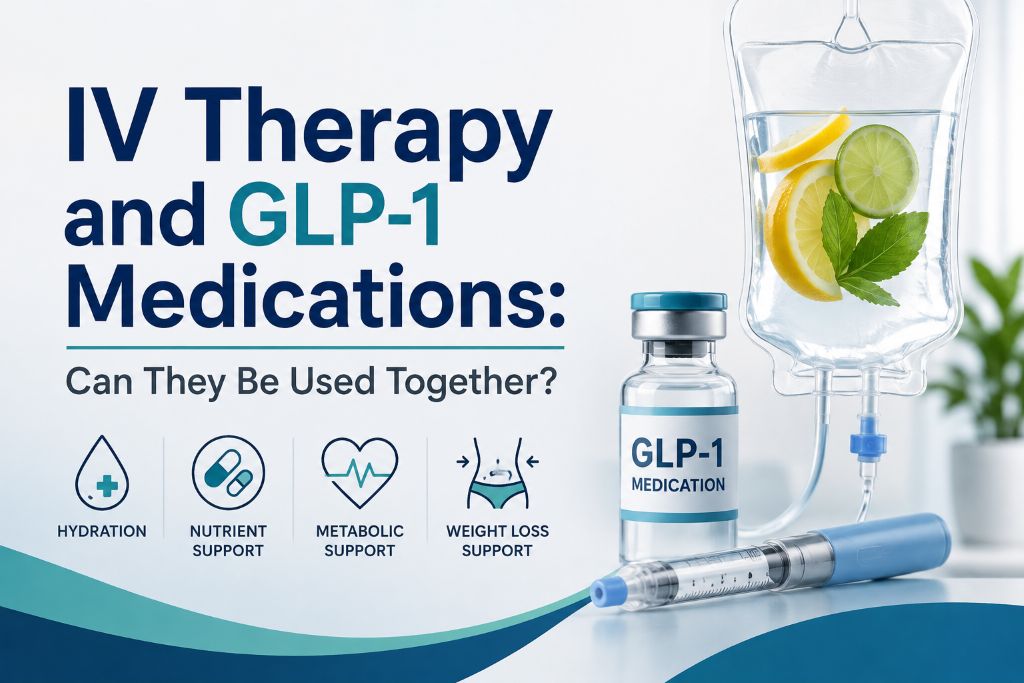
IV therapy and GLP-1 medications are becoming an increasingly popular combination for individuals seeking safe, physician-guided medical weight loss solutions. As more people choose GLP-1 medications to help regulate appetite, improve blood sugar control, and achieve sustainable weight loss, supportive wellness therapies are also gaining attention.
Many patients ask whether IV therapy can be used alongside GLP-1 medications. In many cases, the answer is yes when treatment is recommended and monitored by experienced healthcare providers. While GLP-1 medications focus on appetite regulation and metabolic health, IV therapy helps replenish hydration, vitamins, minerals, and essential nutrients that support overall wellness throughout the weight loss journey.
When these therapies are combined through a personalized treatment plan, patients may experience improved hydration, better energy levels, enhanced recovery, and nutritional support while pursuing their long-term health goals.
What Are GLP-1 Medications?
Supporting healthy weight management often requires more than diet and exercise alone. GLP-1 therapy offers a medically supervised solution that helps patients lose weight safely while improving metabolic function.
How GLP-1 Therapy Works
GLP-1 therapy mimics a naturally occurring hormone called glucagon-like peptide-1, which helps regulate appetite and blood sugar levels.
These medications work by:
- Slowing stomach emptying
- Increasing feelings of fullness
- Reducing hunger signals
- Supporting healthier eating habits
- Improving insulin release
- Helping regulate blood glucose levels
Because patients feel satisfied longer, calorie intake naturally decreases, making medical weight loss more manageable without constant hunger.
Many patients also experience improvements in:
- Blood sugar control
- Long-term weight management
- Cardiometabolic health
- Appetite regulation
- Portion control
Common GLP-1 Medications
Several FDA-approved GLP-1 medications are commonly prescribed as part of a physician-supervised GLP-1 weight loss treatment plan.
Popular options include:
- Semaglutide therapy
- Tirzepatide therapy
- GLP-1 injections
- Prescription weight loss injections
Each medication works slightly differently, making individualized treatment plans essential for achieving safe, sustainable results.
Interesting Read: GLP-1 Weight Loss in Dallas–Fort Worth (Semaglutide & Tirzepatide)
What Is IV Therapy?
Modern wellness programs increasingly include IV therapy to help restore hydration and replenish essential nutrients that support optimal health.
Understanding IV Infusion Therapy
IV infusion therapy delivers fluids, vitamins, minerals, amino acids, and antioxidants directly into the bloodstream through an intravenous line.
Unlike oral supplements, nutrients administered through IV infusion therapy bypass digestion, allowing faster absorption and greater bioavailability.
This method is commonly used for:
- Hydration support
- Vitamin replacement
- Electrolyte balance
- Immune support
- Recovery assistance
- Wellness optimization
Types of IV Treatments
Healthcare providers customize IV therapy based on each patient’s health goals and nutritional needs.
Common treatments include:
1. IV Vitamin Therapy
Designed to replenish important vitamins such as:
- Vitamin C
- B-complex vitamins
- Vitamin B12
2. Vitamin IV Therapy
Customized blends that support:
- Energy production
- Immune health
- Cellular repair
- Overall wellness
3. IV Hydration Therapy
Helps restore:
- Fluid balance
- Electrolytes
- Hydration after illness or reduced fluid intake
4. IV Nutrient Therapy
Provides a combination of vitamins, minerals, amino acids, and antioxidants that support healthy metabolism and recovery.
5. Vitamin Injections
Targeted vitamin injections may also be recommended to address specific nutritional deficiencies.
Interesting Read: 8 Reasons Why Our Patients Love IV Therapy
Can IV Therapy and GLP-1 Medications Be Used Together?
Many patients wonder whether IV therapy with GLP-1 treatments is safe. Under appropriate medical supervision, many providers successfully combine these therapies as part of comprehensive wellness and medical weight loss programs.
The combination allows providers to address multiple aspects of health simultaneously.
Potential advantages include:
- Better hydration
- Improved nutrient replacement
- Enhanced recovery
- Increased energy support
- Personalized wellness care
Before recommending IV therapy and GLP-1 medications, healthcare providers evaluate:
- Medical history
- Current medications
- Existing health conditions
- Laboratory results
- Weight loss goals
- Nutritional status
Each treatment plan should be individualized rather than following a one-size-fits-all approach.
Benefits of Combining IV Therapy with GLP-1 Weight Loss Treatment
Combining IV therapy with GLP-1 medications may provide additional wellness benefits throughout the weight loss process.
1. Improved Hydration
Weight loss programs sometimes contribute to dehydration because patients naturally consume less food and, in some cases, less fluid.
Common signs include:
- Dry mouth
- Fatigue
- Headaches
- Dizziness
- Low energy
IV hydration therapy delivers fluids directly into circulation, helping restore hydration more efficiently than relying on oral intake alone in appropriate clinical situations.
Maintaining proper hydration also supports:
- Healthy circulation
- Muscle function
- Cognitive performance
- Daily energy
2. Replacing Essential Nutrients
Reduced appetite may occasionally make it difficult for patients to consume enough vitamins and minerals through diet alone.
Customized IV nutrient therapy can provide nutrients such as:
- B vitamins
- Magnesium
- Vitamin C
- Zinc
- Electrolytes
- Amino acids
These nutrients help support:
- Healthy metabolism
- Cellular function
- Immune health
- Muscle recovery
- Overall wellness
3. Supporting Energy Levels
Some individuals experience temporary fatigue during calorie restriction and lifestyle adjustments.
IV vitamin therapy may help support healthy energy production by delivering nutrients involved in normal metabolic processes.
Patients often appreciate nutritional support that complements:
- Healthy eating
- Exercise
- Quality sleep
- Physician-directed GLP-1 weight loss treatment
4. Helping Recovery After Weight Loss Injections
Following GLP-1 injections, some patients may benefit from additional hydration and nutritional support.
Customized wellness services can help patients maintain consistency throughout their weight loss journey while supporting:
- Recovery
- Hydration
- Nutritional balance
- Daily wellness
Interesting Read: How GLP-1 Treatments Support Metabolic Health, Cardiovascular Risk, and Longevity
Can IV Therapy Help Reduce Common GLP-1 Medication Side Effects?
Some individuals beginning GLP-1 medications experience temporary side effects while their body adjusts to treatment.
Common symptoms include:
- Nausea
- Fatigue
- Mild dehydration
- Reduced appetite
While IV therapy does not replace medical treatment or eliminate medication side effects, it may help support hydration and nutrient replacement when clinically appropriate.
Potential supportive benefits include:
- Rehydration through IV hydration therapy
- Vitamin replenishment with IV nutrient therapy
- Electrolyte replacement
- Improved overall wellness
Patients experiencing persistent or severe symptoms should always contact their healthcare provider for evaluation.
Interesting Read: 5 Reasons to Consider IV Therapy
Who is a Good Candidate for IV Therapy with GLP-1?
Not everyone requires supportive IV therapy with GLP-1, but many patients may benefit from individualized recommendations.
Ideal candidates often include:
- Individuals beginning medical weight loss
- Patients starting GLP-1 therapy
- Busy professionals with demanding schedules
- Active individuals needing hydration support
- Patients experiencing dehydration
- Individuals with reduced appetite
- Patients requiring vitamin replacement
- People seeking comprehensive wellness support
A personalized evaluation helps determine the most appropriate treatment schedule.
Safety Considerations Before Combining Treatments
Although IV therapy and GLP-1 medications can complement one another, safety should always remain the highest priority.
Before treatment begins, providers review:
- Complete medical history
- Prescription medications
- Allergies
- Chronic health conditions
- Nutritional status
- Hydration levels
- Laboratory testing when necessary
Patients should never begin wellness therapies without guidance from qualified medical professionals.
Ongoing monitoring allows providers to adjust treatment based on:
- Weight loss progress
- Hydration status
- Energy levels
- Nutritional needs
- Overall health
This individualized approach helps maximize benefits while minimizing potential risks.
Why Choose MyFitMed for IV Therapy and GLP-1 Weight Loss Treatment?
At MyFitMed, we provide comprehensive, evidence-based wellness programs designed around each patient’s unique health goals.
Our experienced providers combine advanced IV therapy with medically supervised GLP-1 therapy to support safe, effective medical weight loss.
Patients choose MyFitMed because we offer:
- Experienced medical professionals
- Personalized wellness evaluations
- Customized IV vitamin therapy
- Safe, physician-guided GLP-1 therapy
- Compassionate, patient-focused care
Every treatment plan is developed to improve hydration, nutritional balance, metabolic health, and overall wellness while helping patients achieve sustainable weight loss.
Conclusion
IV therapy and GLP-1 medications can often work together as part of a comprehensive, physician-supervised wellness program. While GLP-1 therapy helps regulate appetite and support sustainable medical weight loss, IV therapy provides hydration and nutritional support that may improve overall wellness throughout the journey.
Every patient has unique health needs, making individualized treatment plans essential for achieving safe and effective results. With expert medical oversight, personalized hydration strategies, and customized nutrient support, combining these therapies can help patients feel their best while working toward long-term weight management goals.
If you’re considering combining IV therapy with GLP-1 therapy, schedule a consultation with MyFitMed. Our experienced medical team will evaluate your health, create a personalized treatment plan, and help you determine whether this comprehensive approach aligns with your wellness and medical weight loss goals.
Frequently Asked Questions
Can I receive IV therapy while taking GLP-1 medications?
Yes. Many patients safely receive IV therapy and GLP-1 medications together under physician supervision. Treatment plans are customized based on medical history, hydration needs, and overall health goals.
Does IV therapy improve GLP-1 weight loss treatment?
IV therapy does not directly increase weight loss, but it may support hydration, nutrient replacement, and overall wellness, helping patients stay consistent with their GLP-1 weight loss treatment plan.
Is IV hydration therapy safe during semaglutide therapy?
For many patients, IV hydration therapy can be safely incorporated during semaglutide therapy when recommended by a qualified healthcare provider after a comprehensive medical evaluation.
Can vitamin IV therapy reduce fatigue from GLP-1 injections?
Some patients find that vitamin IV therapy supports hydration and nutrient replenishment, which may help improve energy levels. However, it should not replace medical treatment or physician guidance.
How often should I receive IV vitamin therapy?
The ideal schedule depends on your individual health needs, hydration status, nutritional deficiencies, and wellness goals. Your provider will recommend a personalized treatment frequency.
Is IV therapy helpful during medical weight loss?
Many patients benefit from IV therapy during medical weight loss because it supports hydration, nutrient replacement, and overall wellness while adjusting to lifestyle changes and reduced calorie intake.
Can tirzepatide therapy be combined with IV therapy?
Yes. Tirzepatide therapy may be combined with IV therapy when prescribed and monitored by qualified medical professionals who develop a personalized treatment plan.
What nutrients are included in IV infusion therapy?
Customized IV infusion therapy may include fluids, electrolytes, B vitamins, vitamin C, magnesium, amino acids, antioxidants, and other nutrients based on individual health assessments.