Choosing the right skin rejuvenation treatment starts with understanding what your skin needs and how each procedure works. Microneedling and chemical peels can both improve skin texture, tone, and overall appearance, but they achieve these results through different mechanisms. At MyFitMed, we take an individualized approach to cosmetic skin treatments, helping patients select options that align with their skin concerns, goals, skin characteristics, and desired recovery time.
What is Microneedling?
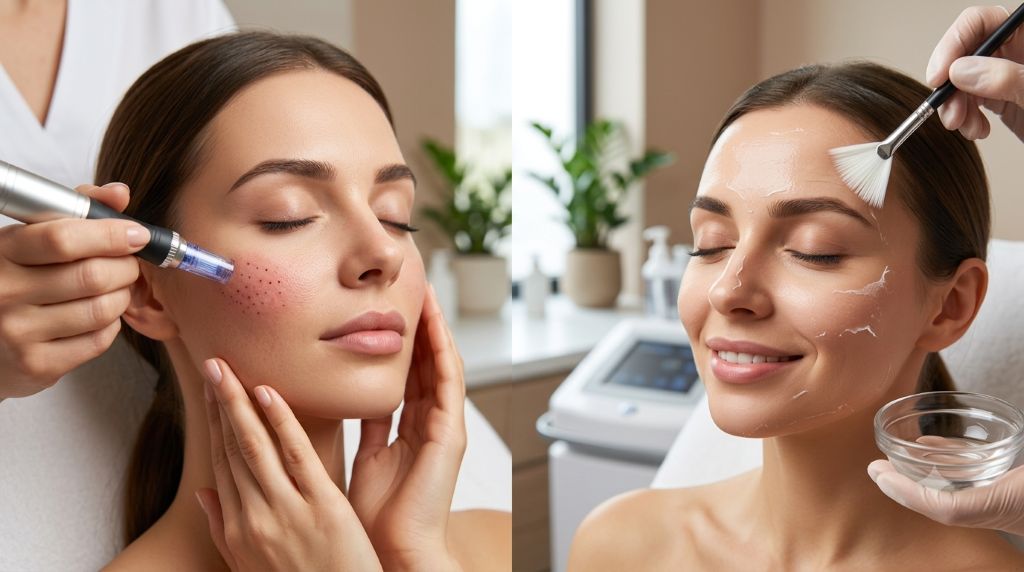
Microneedling treatments use a specialized device with fine needles to create controlled microscopic punctures in the skin. These tiny channels trigger the body’s natural wound-healing response, which can encourage collagen and elastin production over time. The result may be smoother, firmer, and more refined-looking skin.
Microneedling for skin is commonly considered for fine lines, wrinkles, acne scars, enlarged pores, uneven texture, and overall skin rejuvenation. Because the procedure works within the skin rather than simply removing its outermost layer, it can be particularly useful when the primary concern involves texture and collagen support.
We may recommend a series of treatments rather than a single session because collagen remodeling occurs gradually. Treatment depth and frequency should be determined according to the individual’s skin condition, goals, and professional assessment.
What is a Chemical Peel?
A chemical peel treatment uses a carefully selected exfoliating solution to remove or loosen damaged outer layers of skin. Depending on the formulation and concentration, a peel can work at different depths and address different cosmetic concerns.
Chemical peels for skin may help improve the appearance of acne, uneven pigmentation, dullness, fine lines, rough texture, and uneven skin tone. Superficial peels generally involve less recovery, while stronger treatments can produce more noticeable peeling and require additional healing time.
The appropriate chemical skin peel depends on factors such as skin type, sensitivity, pigmentation concerns, previous treatments, and the desired outcome. We believe treatment strength should never be selected simply because a stronger peel sounds more effective.
Microneedling vs. Chemical Peels: Key Differences
Microneedling stimulates collagen production to improve texture and wrinkles, while chemical peels exfoliate damaged skin to target pigmentation, acne, and uneven tone.
| Factor | Microneedling | Chemical Peels |
| How it works | Creates controlled micro-injuries to stimulate skin repair | Exfoliates damaged outer layers |
| Best suited for | Texture, fine lines, wrinkles, acne scars | Pigmentation, acne, dullness, uneven tone |
| Collagen stimulation | Directly stimulates the wound-healing response | Depends on peel depth and formulation |
| Downtime | Usually mild, depending on intensity | Varies from minimal to several days |
| Common concerns | Scars, wrinkles, pores, texture | Acne, pigmentation, dull skin, fine lines |
| Customization | Treatment depth and technique can be adjusted | Strength and formulation can be selected |
| Results | Develop gradually as collagen remodeling occurs | Often includes progressive improvement in tone and texture |
Neither treatment is universally better. The most appropriate option depends on the condition we are trying to improve.
Interesting Read: Chemical Peels: Types, Benefits, and What to Expect After Treatment
Microneedling for Wrinkles and Fine Lines
As we age, collagen production naturally changes, contributing to lines, reduced firmness, and changes in skin texture. Microneedling for wrinkles is designed to encourage the skin’s natural repair process and collagen remodeling.
The treatment may be particularly useful when fine lines occur alongside uneven texture or mild acne scarring. Rather than simply exfoliating the surface, microneedling targets the deeper skin-repair response.
We generally set realistic expectations that improvements develop progressively. Depending on individual goals and skin condition, multiple microneedling sessions may be recommended.
Microneedling for Hyperpigmentation and Uneven Skin Tone
Microneedling for hyperpigmentation requires careful treatment planning because pigmentation can have different causes. Sun-related pigmentation, post-inflammatory hyperpigmentation, melasma, and other forms of discoloration may respond differently to cosmetic procedures.
We consider skin tone, pigmentation history, sensitivity, current skin condition, and previous treatments before recommending microneedling. Patients who are prone to post-inflammatory pigmentation may require particularly careful treatment selection and aftercare.
For some individuals, a chemical peel or another approach may be more appropriate. Professional assessment helps us determine whether microneedling is suitable and how it should be incorporated into an overall skin-care strategy.
Chemical Peels for Acne, Acne Scars, and Skin Texture
A chemical peel for acne scars may be considered when acne-related discoloration, roughness, or superficial textural changes are present. Chemical exfoliation can help remove damaged surface cells and encourage a smoother-looking complexion.
Different peel formulations and strengths address different concerns. A superficial peel may be appropriate for mild discoloration and dullness, while other treatments may be considered for more persistent concerns.
We also account for active acne, skin sensitivity, previous treatments, and the patient’s tolerance for downtime. Chemical peels should be professionally selected rather than treated as a one-size-fits-all facial treatment.
Chemical Peels for Wrinkles and Signs of Aging
A chemical peel for wrinkles can improve the appearance of certain superficial signs of aging by promoting exfoliation and revealing fresher-looking skin underneath.
Superficial peels generally focus on surface-level concerns and typically involve less recovery. Deeper peels affect more layers of skin and can involve substantially greater recovery and risks, making professional evaluation especially important.
Chemical exfoliation may help create a smoother, brighter appearance, but expectations should remain realistic. No cosmetic skin treatment can stop natural aging, and results depend on the individual’s skin and the specific treatment performed.
Interesting Read: Can Chemical Peels Help You Look Younger?
Microneedling With PRP: Is It Better for Your Skin Goals?
Microneedling with PRP combines microneedling with platelet-rich plasma, commonly referred to as PRP. PRP is prepared from a patient’s own blood and contains concentrated platelets and growth factors.
Some patients consider combination treatments when their goals include improving skin texture, fine lines, acne scarring, and overall skin rejuvenation. The rationale is to pair controlled microneedling with PRP as part of a customized aesthetic treatment plan.
We evaluate candidacy individually before recommending combination procedures. Patients considering microneedling with PRP in Frisco, PRP microneedling in Heath should receive a professional assessment to determine whether the treatment aligns with their skin goals.
Which Treatment is Better for Your Skin Goals?
Choosing between microneedling and chemical peels depends on your skin concerns, treatment goals, skin type, and desired results. A professional evaluation can help identify the right approach.
1. For Fine Lines and Wrinkles
When the primary concern is texture, firmness, and fine lines, microneedling for wrinkles may be a strong option because it supports collagen remodeling. Chemical peels can also improve superficial fine lines by exfoliating the skin.
The appropriate choice depends on the severity and location of the concern, skin condition, and desired downtime.
2. For Acne and Acne Scars
Chemical peels may be useful for certain acne-related concerns, particularly when oiliness, superficial discoloration, or dull skin is involved. Microneedling may be considered when acne scarring and uneven texture are more prominent.
We distinguish between active acne, pigmentation, and established scars because each concern may require a different treatment strategy.
3. For Hyperpigmentation
For pigmentation, treatment selection requires additional care. A chemical peel may be appropriate for certain superficial pigmentation concerns, while microneedling may be considered in selected cases.
Skin tone, pigmentation type, sun exposure, sensitivity, and the possibility of post-inflammatory pigmentation all influence the decision.
4. For Uneven Texture
Microneedling may have an advantage when the main objective is improving textural irregularities because it stimulates the skin’s repair response. Chemical peels can also smooth surface texture through controlled exfoliation.
5. For Overall Skin Rejuvenation
Both treatments can contribute to skin rejuvenation. We select between them according to whether the primary objective is collagen remodeling, exfoliation, pigmentation improvement, acne management, texture refinement, or a combination of concerns.
Microneedling vs. Chemical Peels: Which Has Less Downtime?
Downtime varies significantly depending on treatment intensity and individual skin response.
Following microneedling, patients may experience temporary redness, sensitivity, mild swelling, or a tight sensation. These effects generally improve as the skin recovers.
Chemical peels can cause redness, dryness, sensitivity, and peeling. The amount of peeling depends heavily on the type and strength of the peel.
We provide individualized aftercare instructions and recommend following them carefully. Protecting the skin from excessive sun exposure and avoiding unnecessary irritation can be important during recovery.
Can You Combine Microneedling and Chemical Peels?
In selected cases, different facial treatments may be incorporated into a broader skin-rejuvenation plan. However, combining procedures does not automatically make a treatment more effective.
Microneedling and chemical exfoliation both place demands on the skin. Performing them too aggressively or without appropriate spacing can increase irritation and other complications.
We determine whether combination treatments are appropriate based on skin condition, previous procedures, sensitivity, treatment intensity, and the desired outcome.
How to Choose the Right Cosmetic Skin Treatment
Selecting between cosmetic skin treatments involves more than choosing the most popular procedure. We consider several factors, including:
- Primary skin concern
- Skin type and sensitivity
- Pigmentation history
- Treatment goals
- Desired downtime
- Previous cosmetic procedures
- Current skin condition
- Expected results
- Long-term skin-care routine
- Professional recommendations
This individualized approach allows us to focus on the actual concern rather than recommending the same procedure to every patient.
Personalized Skin Treatments at MyFitMed
At MyFitMed, we recognize that every person’s skin has different needs. We take a personalized approach by considering your skin concerns, aesthetic goals, skin condition, and expectations before recommending a treatment. Depending on your needs, options such as microneedling, chemical peels, and PRP may help improve fine lines, acne scars, uneven texture, pigmentation, and overall skin appearance.
Patients in Dallas, Frisco, Heath, and Southlake can explore personalized aesthetic care designed around their individual goals. We explain the benefits, expected results, recovery, and suitability of each treatment so you can make an informed decision. Whether you are looking for subtle skin rejuvenation or a more comprehensive approach, our goal is to create a treatment plan that supports healthy-looking, natural results.
Conclusion: Finding the Right Treatment for Your Skin
Microneedling and chemical peels can both play valuable roles in skin rejuvenation treatments, but they work in fundamentally different ways. Microneedling focuses on controlled skin stimulation and collagen remodeling, while chemical peels use exfoliation to address surface-level concerns such as dullness, pigmentation, acne, and uneven tone.
We consider your skin type, primary concern, aesthetic goals, previous treatments, sensitivity, and desired downtime before recommending a cosmetic skin treatment. In some cases, one procedure may be sufficient. In others, a carefully planned combination of treatments may provide a more comprehensive approach.
For personalized guidance on microneedling, chemical peels, PRP microneedling, and other facial treatments, MyFitMed can help you explore options designed around your individual skin goals.
FAQs
Is microneedling better than a chemical peel?
Neither treatment is universally better. Microneedling may be better suited to collagen support, wrinkles, scars, and texture, while chemical peels can be useful for pigmentation, acne, dullness, and superficial skin concerns.
Is microneedling good for wrinkles?
Microneedling can support collagen remodeling, which may improve the appearance of fine lines and uneven texture. Results develop gradually, and multiple sessions may be recommended depending on individual skin goals.
Are chemical peels good for acne scars?
Certain chemical peels may improve the appearance of superficial acne-related discoloration and texture. The most appropriate peel depends on the type and severity of scarring, skin sensitivity, and overall skin condition.
Can microneedling help with hyperpigmentation?
Microneedling may be considered for selected pigmentation concerns, but results depend on the underlying cause and individual skin characteristics. Professional assessment is particularly important for people prone to post-inflammatory pigmentation.
How long does it take to see results from microneedling?
Microneedling results develop progressively as the skin undergoes its natural repair and collagen-remodeling process. The timeline varies according to treatment intensity, skin condition, and the number of sessions performed.
How often can you get a chemical peel?
There is no universal schedule for every chemical peel. Frequency depends on the type and strength of the peel, skin condition, previous treatments, and professional recommendations.
Can you get microneedling with PRP?
Yes, PRP can be incorporated into a microneedling treatment for selected patients. The combination may be considered for goals such as improving texture, fine lines, acne scarring, and overall skin rejuvenation.
Which treatment has more downtime: microneedling or a chemical peel?
Downtime depends on treatment intensity. Microneedling commonly causes temporary redness and sensitivity, while chemical peels can cause varying degrees of dryness and peeling. Stronger treatments generally require more recovery.